Dental Physiotherapy
Dental Physiotherapy in Katowice
Do you have problems with bruxism or clicking in the temporomandibular joint? Do you wake up with a tired face or feel tension in your cheeks throughout the day? Perhaps you experience pain around your ear, head, or neck?
High tension in the temporomandibular joint area, if left untreated, can have many negative consequences. In extreme cases, it can even lead to tooth wear or limited mouth mobility.
Reduce the negative effects of disrupted temporomandibular joint function and take advantage of our “Dental physiotherapy” service.
Pricing
220 PLN (45 min) – dr Mateusz Pawlukiewicz
What does dental physiotherapy help with?
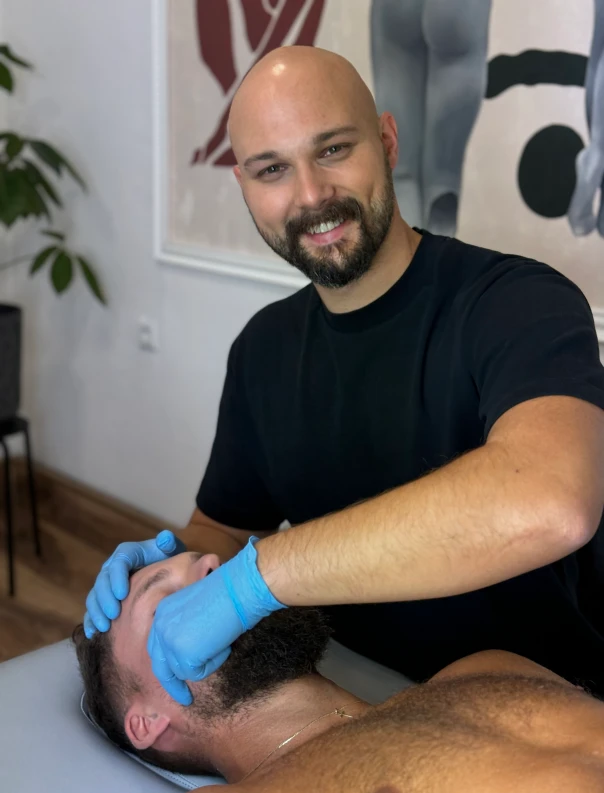
Dental physiotherapy focuses on issues related to the masticatory system, facial muscles, and the temporomandibular joint. The goal is to restore the proper function of these structures and alleviate pain. This pain may be associated with muscle tension, teeth grinding, or injuries (surgical procedures, impacts). The therapy provides relief from:
- headaches,
- neck and jaw pain,
- facial nerve dysfunctions (e.g., trigeminal neuralgia),
- and post-surgical conditions.
Techniques used in Dental Physiotherapy
We use a wide range of techniques, including joint mobilizations, massage and muscle relaxation, as well as exercises. We also teach self-massage techniques that patients can perform at home to maintain the therapy results. After procedures within the oral cavity, we also apply kinesiology taping, which helps reduce pain and swelling.
Who is this therapy for?
Dental physiotherapy can benefit individuals suffering from:
- pain in the jaw, head, and neck,
- as well as those experiencing jaw locking and clicking in the temporomandibular joint.
Another group of patients includes those recovering from maxillofacial and dental surgeries. They usually experience discomfort related to the body’s adaptation to new conditions. Dental physiotherapy is especially helpful for chronic pain conditions and stress, which can lead to unconscious muscle tension in the face and neck.
What can you expect?
Our specialists will not only tailor techniques to your needs but also suggest exercises for you to do at home, which will help maintain the effects of therapy. It turns out that bruxism, for example, is one of those dysfunctions that requires regular self-care by the patient at home in order to achieve stable therapeutic success.